


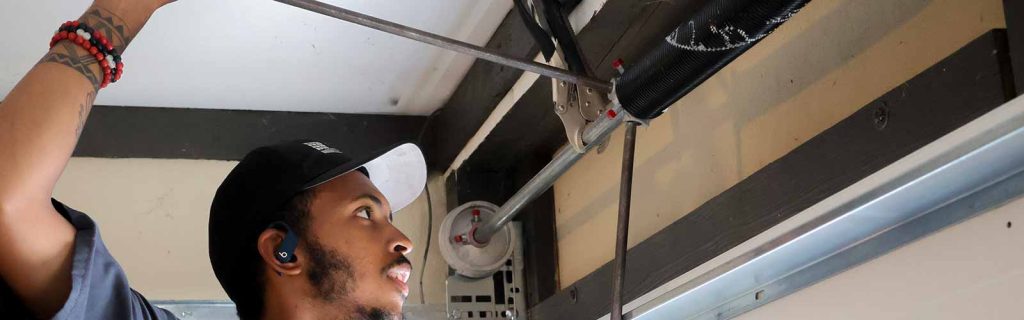
A frayed garage door cable is a serious safety concern because it helps carry the door’s weight during every open and close cycle. When strands weaken, the door can shift, drop, or move unevenly, increasing safety risks to your home, vehicles, and anyone nearby.
In Hilton Head, SC, cable wear often worsens more quickly due to moisture and corrosion, so a small issue can turn into a sudden failure. Scheduling professional garage door repair early helps protect the entire garage door system, reduce costly repairs, and lower the risk of serious injury or property damage.
What Makes a Frayed Cable a Garage Door Safety Concern?
A frayed cable changes how the door carries load, so the system can become unstable under high tension and shift weight into parts that are not designed to absorb it, increasing safety risks and the chance of serious injury or property damage.
Common reasons a worn garage door cable becomes dangerous include:
- The door’s weight is no longer supported evenly, which can cause sudden drops or uneven movement.
- Lift support changes on one side of the door, which can twist sections and bind rollers in the track.
- The torsion spring system must compensate for cable wear, which can cause excessive strain along the lift path.
- The garage door opener may push harder to keep the door moving, adding extra strain and potentially causing costly damage.
- A broken cable can trigger a rapid failure event, turning normal use into a safety hazard for anyone nearby.
To understand how uneven lift, added opener strain, and spring imbalance connect to larger system risks, read our blog on Frayed Garage Door Cable: Signs, Risks, and What to Do, as it explains how to identify warning signs, evaluate safety risks, and determine when professional service is necessary.
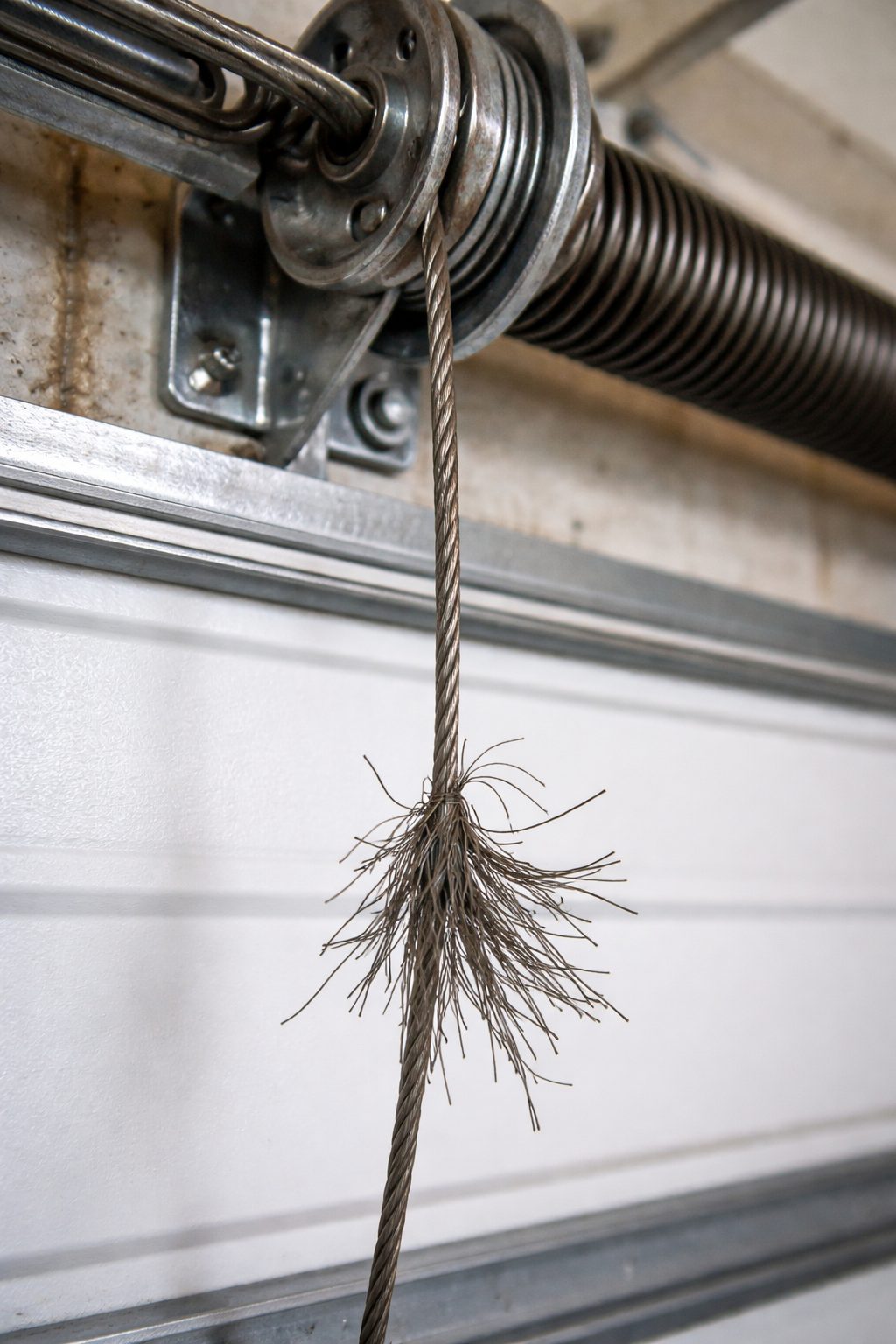
How a Frayed Cable Creates Dangerous Door Movement
Sudden Door Drop Risk From Loss of Lift Support
A frayed garage door cable can fail under high tension, allowing the door’s weight to shift suddenly, turning normal movement into a serious safety risk if the door drops faster than the lift system can control.
Watch for outcomes like:
- A load imbalance that makes one side carry more of the weight of the door.
- Travel instability that creates uneven movement at the start or end of a cycle.
- An increased impact force increase that raises the chance of property damage near vehicles.
- Strand progression failure where minor wear turns into a broken cable under load.
- Injury exposure that increases the risk of serious injury in the closing path.
DASMA explains that frayed lift cables connected to bottom brackets can break under load, causing dangerous door movement, reinforcing the need to never ignore compromised support.
Door Cocking and Track Binding That Can Trigger a Hard Stop
A cable that weakens unevenly can pull the door out of balance, increasing track pressure and causing the door to jam abruptly during travel.
Hard-stop indicators often include:
- Side-load pressure that forces rollers tightly into one track.
- Friction spikes that produce jerky movement mid-cycle.
- Section twist that shifts the door’s weight off-center.
- Hardware shock transfer that accelerates wear in hinges and rollers.
- Cycle interruption that leaves the door stuck partway open.
Track binding, combined with cable wear, indicates the garage door system is no longer operating smoothly, increasing strain across connected parts and raising the risk of further damage.
Opener Overload That Can Damage Internal Parts
A compromised cable can cause the garage door opener to experience abnormal resistance, placing extra strain on the drive motor and internal components and potentially shortening their lifespan.
Overload patterns may show up as:
- Force demand spikes that make the motor work harder than normal.
- Heat buildup that gradually weakens internal drive parts.
- Stop-and-reverse behavior triggered by unexpected resistance.
- Performance drift that reduces consistent travel speed.
- System-wide stress that spreads wear into the entire system.
Chamberlain Group explains how safety reversal systems respond to resistance during closing cycles, underscoring why opener strain should be treated as a warning sign of a deeper mechanical imbalance.
Cable Whip and Snapback During a Break or Slip
A cable that slips off a drum or fails suddenly can recoil with force, and stored mechanical energy in the lift path can release quickly enough to pose serious risks in a confined garage.
Hazards tied to recoil include:
- Rebound force that snaps the cable toward the anchor hardware.
- Wire-end lash that can cut skin if strands flick outward.
- Drop-and-recoil pairing where the door’s weight shifts at the same moment support is lost.
- Unpredictable motion that increases the potential for accidents around vehicles.
- Handling danger if a homeowner attempts a DIY fix without the right tools, including proper tools for high-load parts.
Uncontrolled recoil is one of the clearest signs that the lift path is no longer predictable, which makes an emergency garage door service the right response before a sudden movement causes further damage.
Drum Slip That Can Twist the Shaft and Throw Off Alignment
A frayed cable may not seat correctly in the drum grooves, and slipping at the drum can twist the shaft and disrupt proper tension across the torsion spring system.
Slip-related damage patterns often involve:
- Groove tracking errors that grind strands and accelerate cable wear.
- Shaft twist pressure that alters the lift balance on one side of the door.
- Bearing load shifts that increase wear and create future issues.
- Uneven winding that raises safety risks during opening and closing cycles.
- Repeat failure setup where cable replacement becomes necessary sooner than expected.
Stable drum tracking depends on balanced spring tension across the shaft, and a technician can restore that balance through a garage door spring repair to reduce mis-tracking and repeated wear.
Garage Door Cable Problems That Should Be Treated as Unsafe
Certain garage door cable conditions should be treated as a safety hazard because the lift system may no longer evenly support the door’s weight, leading to sudden drops, uneven movement, and further damage to the garage door system.
Unsafe cable problems that professionals take seriously include:
- Frayed strands at the bottom bracket connection, where the cable carries a heavy load during every cycle.
- A cable that is slipping off the drum grooves, which can trigger uneven lifting and sudden release.
- One cable is carrying more load than the other, causing the door to tilt and bind in the track.
- A cable that is partially snapped or fully broken, which removes lift support on that side.
- Cables that cause jerky movement or uneven travel are often tied to misalignment and extra strain.
Any of these garage door cable issues indicates that the door is no longer operating safely, so professional service helps reduce the risk of serious injury, prevent property damage, and avoid costly repairs.
How Frayed Garage Door Cable Risk Changes by Door Type and Usage
Frayed garage door cable risk varies by home because door weight, spring setup, and daily cycle count all affect how quickly cable wear progresses and how severe the safety risks become.
Risk factors that can increase danger and failure likelihood include:
- Heavier or insulated garage door designs that place more load on lift cables during every cycle.
- High-use households where frequent opening and closing speed up wear and raise the chance that a cable snaps.
- Coastal moisture and corrosion exposure that weakens metal strands faster and creates signs of wear earlier.
- Lift systems running with improper balance, which add excessive strain and reduce smooth operation.
- Older hardware and worn garage door parts increase friction and accelerate the development of garage door cable issues.
Heavier doors and high-cycle use accelerate cable wear in ways that are easy to miss during daily routines, which is why professional garage door maintenance is important for catching risks early and maintaining consistent, safe operation.
What Causes a Garage Door Cable to Break Without Warning?
A garage door cable can appear stable until it fails due to internal strand fatigue, corrosion, or load imbalance that builds over time, then suddenly release during a normal open or close cycle.
Common causes behind sudden cable failure include:
- Strand fatigue from repeated cycles weakens metal under high tension.
- Rust and corrosion inside the cable bundle reduce strength, even if the outside looks minor.
- Worn or sharp drum grooves that grind strands and speed up cable wear.
- Spring imbalance that creates improper tension across the lift path.
- Track or roller resistance that adds too much strain and increases failure risk.
- Misalignment at the shaft or drums causes the cable to track erratically and fray more quickly.
To understand the most common failure triggers in more detail and see how professionals connect symptoms to root causes, read our blog on What Causes a Garage Door Cable to Snap?, which breaks down the leading mechanical and environmental reasons cables fail.
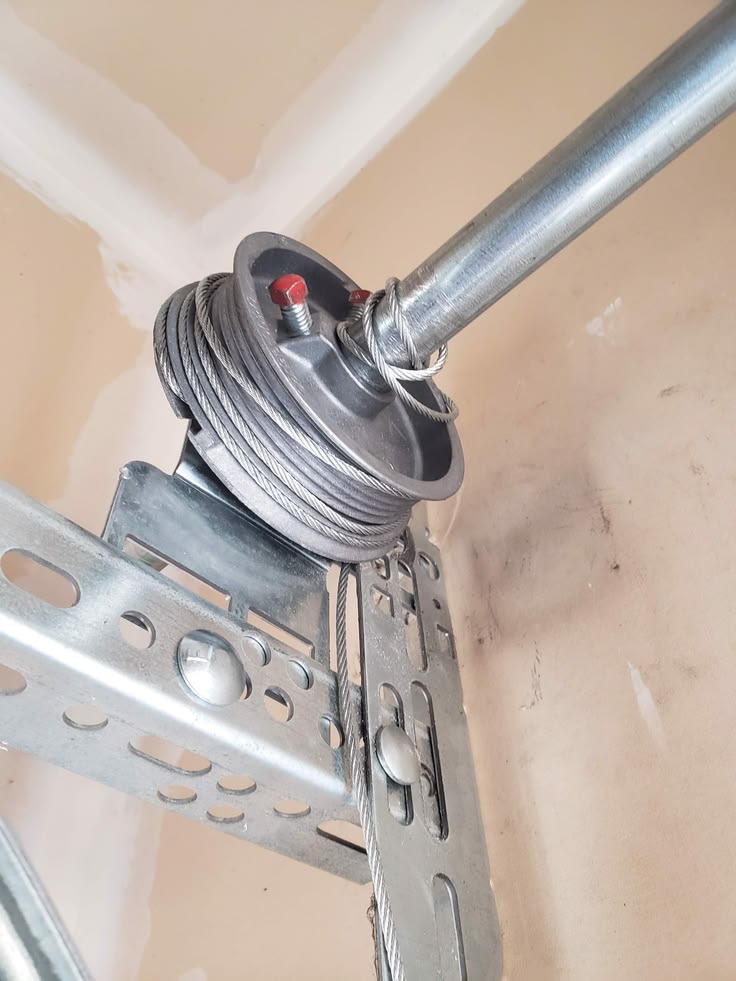
Garage Door Cable Replacement Timing and What It Prevents
Garage door cable replacement timing is a safety decision tied to load control and system stability, not just visible wear.
|
Replacement Timing Trigger |
What It Prevents |
Why It Matters for Safe Operation |
|
Visible strand separation near the bottom bracket |
Sudden cable snaps and an uncontrolled door drop |
High-load anchor areas fail faster under high tension |
|
Cable tracking off the drum grooves |
Crooked travel, binding, and drum damage |
Mis-tracking increases friction and speeds cable wear |
|
One side lifts faster than the other |
Door tilt, track stress, and panel strain |
Uneven lift shifts the door’s weight to one side of the door |
|
The door starts showing jerky movement |
Hardware wear, roller damage, and further damage |
Resistance creates too much strain and reduces smooth operation |
|
Opener works harder than normal |
Motor overload and costly damage |
Extra strain can shorten the garage door opener’s life |
|
Repeated cable issues after adjustments |
Future issues and repeat service calls |
Persistent imbalance often signals an entire system problem |
To confirm the right timing for a new cable and determine when replacement is necessary due to safety risks and system wear, read our blog on When Should You Replace a Garage Door Cable?, which explains the decision points professionals use.
What Happens During Professional Garage Door Cable Repair Service
Professional garage door cable repair focuses on restoring safe load control across the lift system, so the door carries weight evenly and the garage door system returns to stable, predictable travel.
A professional service visit commonly includes:
- A visual inspection of the cable and lift path to confirm cable wear, signs of wear, and any garage door cable issues affecting safe operation.
- Bottom bracket and anchor checks to verify that high-tension attachment points are secure and undamaged.
- Drum and winding path review to confirm that the cable tracks are correctly installed and do not grind or slip.
- Spring system evaluation to confirm spring tension, proper tension, and torsion spring system balance for smooth operation.
- Opener strain assessment to verify the garage door opener is not pulling against resistance or too much strain.
- System testing through full travel to confirm even lift, controlled motion, and reduced risk of further damage across the entire system.
A complete service visit provides peace of mind by confirming the lift path is in good condition and reducing the risk of future issues that could lead to costly repairs.
Protect Your Home From Frayed Garage Door Cable Failure
A frayed lift cable is a serious safety hazard because it can disrupt load control, increase the chance of a sudden drop, and cause further damage across the garage door system. In Hilton Head, SC, coastal moisture can speed up cable wear, so a small weakness can turn into a sudden failure.
Elite Overhead Garage Doors supports Hilton Head homeowners with professional service that checks the lift balance, high-tension hardware, and overall door travel to ensure safe operation. If you suspect a failing garage door cable, contact us or give us a call today to schedule a safety inspection.