


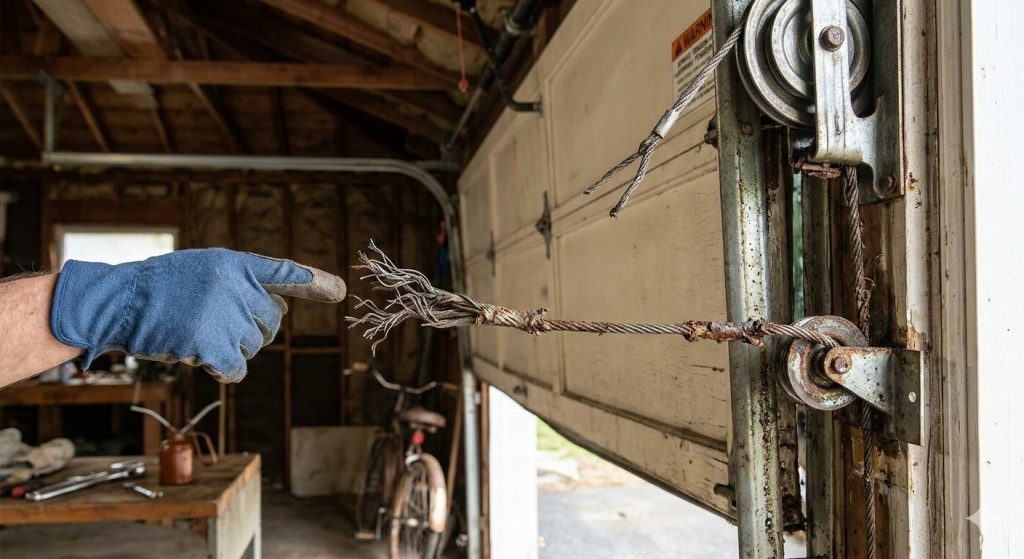
A garage door cable plays a critical role in lifting and lowering your garage door safely by working with the spring system to support the door’s weight. When a cable weakens or fails, the entire garage door system can become unstable, increasing safety risks and the need for prompt garage door repair.
Understanding what causes a garage door cable to snap helps homeowners recognize early warning signs, prevent further damage, and avoid costly system failure. Below, we break down the most common causes, the warning signals that appear first, and when professional service becomes necessary.
Is a Snapped Garage Door Cable an Emergency?
A snapped garage door cable creates immediate instability because the door’s weight is no longer evenly supported, potentially shifting the load to other parts of the garage door system and increasing the risk of sudden movement or serious safety hazards.
Common warning conditions that indicate urgent attention include:
- The door lifts unevenly or tilts to one side of the door
- One side drops faster than the other during closing
- The garage door opener strains and movement becomes jerky
- A broken cable hangs loose near the bottom bracket
- The door becomes stuck halfway and will not travel normally
These warning conditions often start with visible strand separation and an increasing imbalance, which is why reviewing our blog on Is a Frayed Garage Door Cable Dangerous? helps confirm when garage door cable issues warrant emergency treatment.
What Happens Right Before a Garage Door Cable Snaps
A garage door cable rarely fails without warning because small strand breaks, friction changes, and shifting spring tension build up under high tension until the weakest point gives out during normal travel.
Common warning signs right before failure include:
- Uneven movement where one side lifts faster than the other
- Jerky movement during the first few inches of travel
- Grinding or scraping sounds near the top corners, where the cable wraps
- Visible signs of wear, like rust, kinks, or strand separation along the cable
- The door feels heavier than normal as the door’s weight stops balancing evenly
- Slack or messy wrapping on the drum that looks different than normal
- A sharp pop followed by the door sitting crooked or stuck
According to a garage door maintenance guide from BobVila, uneven movement and abnormal noise can point to imbalance and excess strain, and those same symptoms often appear just before cable failure.
Common Causes of a Garage Door Cable to Snap
Normal Wear From Daily Open-and-Close Cycles
A garage door cable can fail simply from age, as repeated movement slowly breaks down the steel strands until the cable can no longer support consistent lifting forces.
Common wear patterns that build over time include:
- Cycle fatigue that weakens strands little by little
- Micro-bending around drums that speeds up strand breakdown
- Higher use in busy households that accelerates cable wear
- Heat and cold changes that make metal fatigue worse
- Missed regular inspections that allow early damage to grow
Over time, normal cycling turns small strand damage into a serious issue when tension spikes during travel.
Rust and Corrosion That Weakens Cable Strands
Salt air and humidity on Hilton Head can accelerate rust, and corrosion can reduce strand strength until a cable fails under load, even during normal operation.
Coastal corrosion damage often shows up as:
- Orange or dark staining along the cable surface
- Rough cable texture that increases friction at contact points
- Pitting that reduces metal thickness and strength
- Strand separation that starts near damp areas
- Faster wear when moisture sits on metal overnight
NASA explains how corrosion weakens metal through environmental reactions, and that same process helps clarify why rusted cables lose strength and snap.
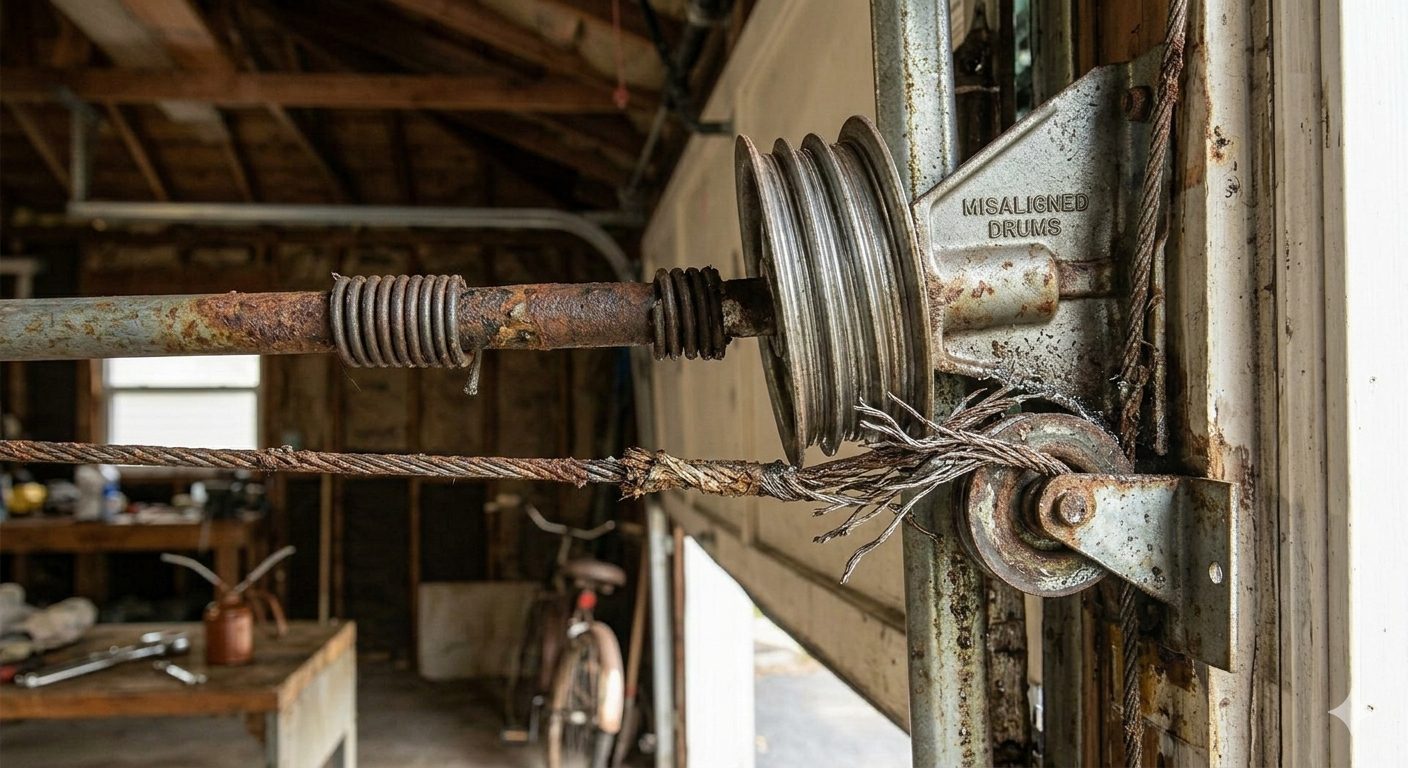
Misaligned Drums That Force the Cable Off Its Track
A shifted drum changes the cable path, and the cable can rub, slip, or wrap unevenly, leading to stress concentration and increased failure risk.
Drum misalignment usually creates signals like:
- Cable wrap that stacks or overlaps instead of lying flat
- Side-loading that pulls the cable at an angle
- Sudden load shifts during the last part of closing
- A tilt that becomes more obvious over time
- Friction marks where the cable contacts the hardware
Even a small drum drift can create a repeated strain pattern that wears strands faster than normal.
Worn Pulleys on Extension Spring Systems
On setups using extension springs, worn pulleys can drag or wobble, and a cable can grind against metal edges until strands weaken and break.
Pulley-related causes often include:
- A pulley that binds and forces the cable to slide
- A worn groove that cuts into strands during travel
- Side-to-side wobble that changes the cable angle
- Hardware wear that creates uneven tension across the run
- Misrouting that increases friction during lifting
Pulley wear raises failure odds because cable movement depends on clean routing and low friction.
Loose or Damaged Bottom Bracket Connection Points
A compromised bottom bracket can shift the cable anchor point, and the door can start pulling unevenly until the cable takes too much stress on one side.
Anchor-point problems commonly show up as:
- Bracket movement that changes the cable angle
- Rusted edges that fray strands over time
- Bent hardware that forces the cable to pull off-center
- Loosening fasteners that allow vibration and slip
- Uneven door corner height when the door is closed
A weak anchor point turns normal door travel into an uneven load, which can shorten the cable’s lifespan.
Frayed Cable Strands That Finally Let Go
A frayed garage door cable fails because strand loss forces the remaining wires to carry more load, and the weakened section eventually breaks when the system cycles under tension.
Visible fraying usually includes signs like:
- Wire “whiskers” near the lower corner or drum area
- Rough sections that look twisted or kinked
- Strand gaps that widen over several days or weeks
- Dark discoloration that suggests corrosion under the surface
- A cable section that looks thinner than the rest
Fraying is a late-stage warning sign, so continued operation can quickly turn frayed strands into full breaks.
A Door That’s Out of Balance Adds Extra Load
When the spring system stops supporting the door’s weight correctly, the cables end up carrying forces they should not, and the failure risk rises rapidly under high tension.
Balance-related overload often shows up as:
- The door feels heavier or harder to move
- An uneven lift that makes the door travel crookedly
- Extra strain that transfers into cables during startup
- A tilt that worsens as the door rises
- Increased vibration that signals the system is not stable
This Old House explains how garage door springs help support door weight for smoother movement, and a spring imbalance helps explain why cable stress increases.
Track Binding That Creates Sudden Cable Stress
Track binding can make the door stick and release, and sudden load changes can spike cable tension, causing strands to weaken or break.
Binding stress often builds from issues like:
- Pinch points that force the door to fight the track
- Roller wear that creates rough travel and vibration
- Minor track drift that increases friction on one side
- Repeated sticking at the same point in travel
- Movement that turns rough instead of controlled
Uneven travel and rough movement can signal mechanical strain, and that same strain can push cable strands toward failure over time.
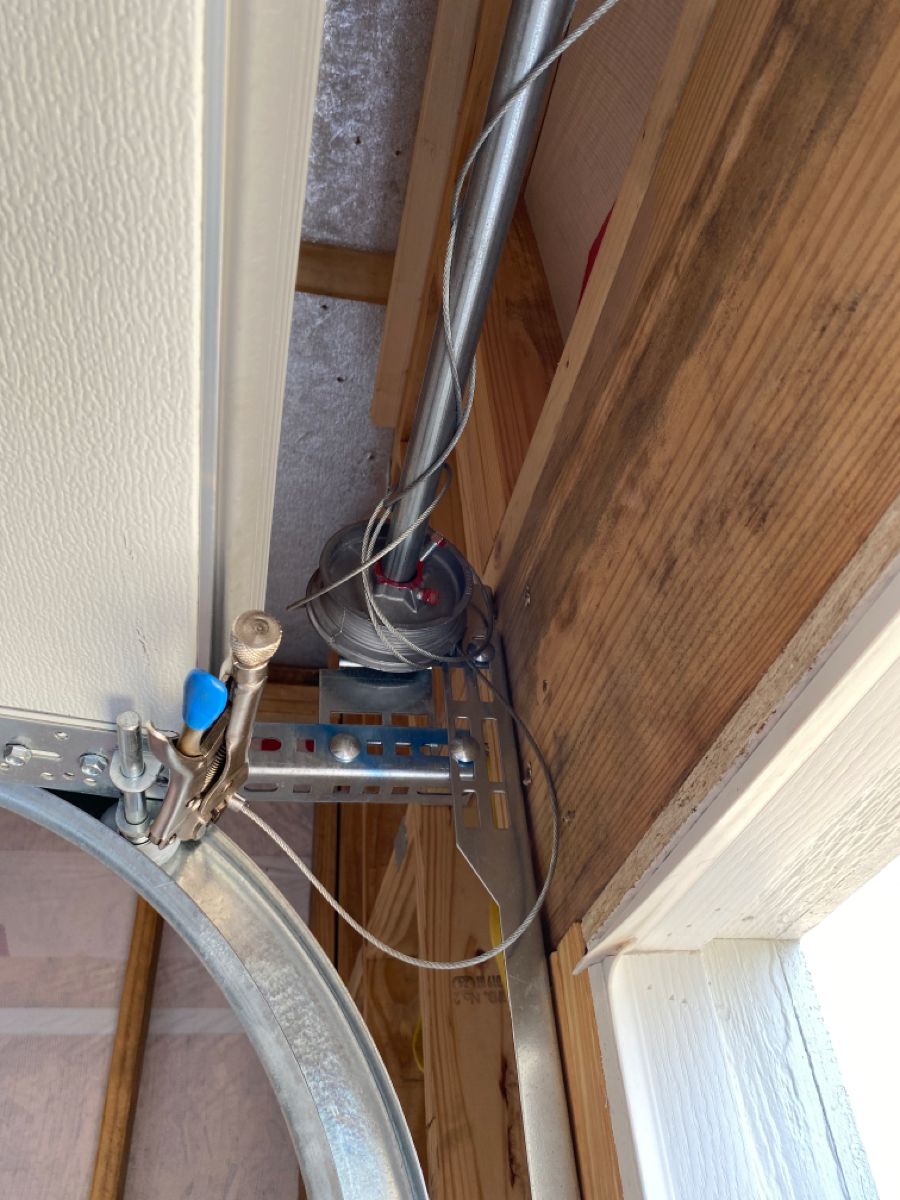
Incorrect Spring Tension That Overloads the Cable
Incorrect spring tension can overload one side, and the cable on that side can withstand more force than intended until the strands fatigue, increasing the likelihood of a break.
Tension-related causes often include:
- One side carries more load than the other
- Faster wrap on one drum that creates uneven pull
- Increased strain during the first seconds of lifting
- A vibration that signals an unstable force distribution
- A door that no longer moves with smooth operation
A spring imbalance often lies behind repeated cable stress, so a garage door spring repair is the best option when the cable exceeds its normal load.
How Cable Failure Spreads Into Bigger System Damage
A snapped garage door cable can shift the door out of balance, placing uneven stress on multiple parts and increasing the risk of safety hazards throughout the garage door system.
Ways a failed cable can trigger bigger problems include:
- Drums and torsion cables are wrapping unevenly and adding friction
- Unbalanced lift load across the torsion spring system
- Track and roller wear from uneven movement and side pressure
- Door sections are twisting during travel and increasing panel stress
- Garage door opener strain and more frequent reversals
- Bottom bracket hardware is loosening and reducing corner stability
- One side is dropping faster and increasing serious safety risks
A door that becomes unstable after a cable failure can trigger a rapid chain of damage, making an emergency garage door service the right option when operation becomes unpredictable.
When Cable Failure Means You Need Professional Service
A snapped or failing garage door cable can become a serious safety hazard because the door’s weight may shift without warning, placing a high-tension load on the entire system and increasing the risk of further damage and potential accidents.
Situations that often require professional service include:
- A broken cable hanging loose near the bottom bracket
- Uneven movement that causes the door to lift crookedly or bind in the tracks
- Jerky movement or loud popping sounds during opening or closing
- The garage door opener is straining, reversing, or stopping mid-cycle
- Drums that show messy wrapping or cables that have jumped grooves
- Signs of wear, like rust, kinks, or strand separation on either side
- A door that feels heavier than normal or will not stay level during travel
When these warning signs appear, reading our guide on Frayed Garage Door Cable: Signs, Risks, and What to Do helps connect the symptoms to the most common risks and the safest next step for the full garage door system.
Garage Door Cable Repair vs Full Replacement
Choosing between garage door cable repair and full replacement depends on the condition of the strands, the alignment of the hardware, and whether the door remains stable under load.
Factor | Garage Door Cable Repair May Fit When | Garage Door Cable Replacement Often Fits When |
Cable Condition | Cable routing is off, but strands remain intact and in good condition | A broken cable, kinks, rust, or strand separation shows clear structural damage |
Door Movement | Movement is mostlya smooth operation with only minor uneven movement | Jerky movement, tilting, or repeated binding shows unstable travel and added strain |
Root Cause | Miswrap, drum position, or minor hardware issues can be corrected without installing a new cable | Wear patterns suggest cable wear has progressed, and failure risk remains high |
System Stress | Spring tension and proper tension appear stable after corrections | Spring tension is uneven, or the door’s weight shifts to one side of the door |
Risk Level | Safety risks stay controlled once alignment and routing are corrected | Serious safety risks remain because the cable has already weakened or failed |
Long-Term Reliability | Service reduces future issues when the cable is still at full strength | Cable replacement supports long-term reliability when strand strength is reduced |
Cost Drivers | Average cost may depend on labor time, access, and related adjustments | Average cost may depend on door height, weight of the door, cable type, and related garage door parts |
Best Use Case | Minor cable issues caught early during regular maintenance | Worn cables, repeated failures, or damage that raises the risk of costly repairs |
When cable damage shows clear signs of wear or failure risk remains high, read our blog on When Should You Replace a Garage Door Cable? to confirm when replacement is the better option than continued repair.
Preventive Inspection Signals That Predict Cable Failure
Early warning signs often appear before a garage door cable fails, such as strand wear, corrosion, and alignment stress, which build over time and change how the door moves and sounds.
Signals that often predict cable failure include:
- Visible signs of wear, such as rust, kinks, or strand separation along the cable
- Fraying near the bottom bracket or near the drum wrap area
- Uneven movement that makes the door tilt or rise faster on one side of the door
- Jerky movement or shaking during the first part of travel
- New scraping, grinding, or popping sounds near the top corners
- Slack in one cable when the door is closed, or a wrap that looks messy on the drum
- Track rubbing or roller strain that suggests extra strain during travel
- A door that feels heavier than normal, suggesting counterbalance loss and added load
Small warning signs are easier to address before they turn into a breakdown, and garage door maintenance helps identify cable wear and alignment issues early.
What to Do When a Garage Door Cable Snaps
A snapped garage door cable is more than an inconvenience because it can pose serious risks, cause uneven door travel, and lead to costly repairs if the garage door system is forced to run while unbalanced. Prompt service helps limit further damage and restore smooth operation across key garage door parts.
Elite Overhead Garage Doors supports Hilton Head, SC, with professional service that addresses cable failures and checks spring tension, drums, and the torsion spring system to ensure stable door travel. If a broken cable has left the door unsafe or uneven, contact us or give us a call today to schedule service that identifies the cause of a garage door cable snap and reduces the risk of repeat failures.