


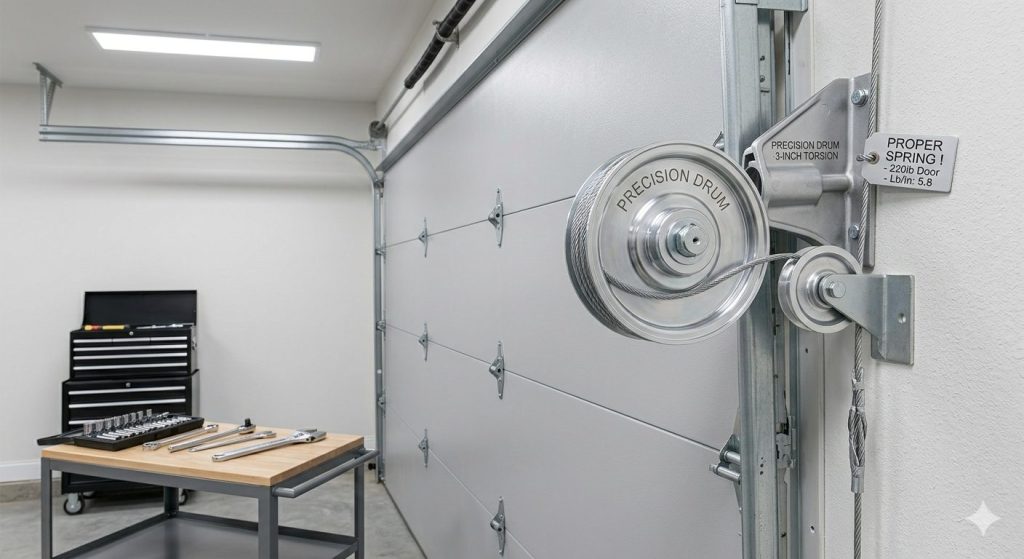
A garage door cable plays a critical role in lifting and lowering your garage door safely by helping carry the door’s weight through the spring system. When it begins to wear, fray, or stretch, it can affect balance, create uneven movement, and increase the risk of sudden failure.
Knowing when to replace a garage door cable helps prevent serious safety risks, costly damage, and emergency breakdowns. In many cases, early replacement as part of professional garage door repair is the safest way to protect your system and maintain smooth operation.
Should You Stop Using the Door If Your Garage Door Cable Is Frayed?
A damaged cable can turn normal door travel into an unstable lift because strand separation changes how the door’s weight is supported, increasing strain across the spring system and raising the risk of serious injury if the cable fails under high tension.
Common warning signs that mean you should stop using the door include:
- Strands sticking out, splitting, or thinning along the cable
- Uneven movement where one side rises faster than the other
- Jerky movement or binding during open and close cycles
- A cable that appears off the drum or loosely seated
- Sharp snap or ping sounds during operation
These warning signs often appear before a full failure, and understanding how they escalate into larger safety risks is explained in our blog on Frayed Garage Door Cable: Signs, Risks, and What to Do, where we break down risk levels and next steps.
Replace a Garage Door Cable Immediately If You Notice These Signs
Visible Strand Breaks or Unraveling Along the Cable
Strand breaks or unraveling on a garage door cable signal reduced lifting strength, and continued cycles can push cable wear toward a broken cable under high tension.
Warning signs that often confirm immediate risk include:
- Loose wire strands sticking out along the cable length
- A thinning area near the drum where winding pressure is highest
- Rough, scraped metal where the cable contacts the garage door parts
- Dark discoloration that suggests corrosion inside the strands
- Uneven surface texture that shows advanced signs of wear
Clopay highlights safety inspection items for garage doors, including signs such as unraveling strands and corrosion, supporting the need to act before the cable fails under load.
Crooked Door Travel or One Side Lifting Faster Than the Other
Crooked travel means the lift support is no longer balanced across the door, which can increase uneven movement and increase safety risks during normal operation.
Lift-balance symptoms that often point to cable trouble include:
- One side of the door rises higher than the other during opening
- A tilted door position that becomes more obvious near mid-travel
- The bottom seal forms a wider gap on one side before closing fully
- The door is drifting toward one track while lifting under load
- A changing door level that appears worse over several cycles
The Bob Vila garage door maintenance article highlights that new uneven movement often points to balance problems that can snowball into larger cable and hardware issues.
Jerky Movement, Binding, or Hanging During Open and Close Cycles
Jerky movement or binding can indicate the cable is not feeding cleanly on the drum, reducing smooth operation and increasing extra strain across the garage door system.
Motion changes that often signal cable issues include:
- A sudden jerk at the start of opening
- Repeated hanging at the same point in travel
- Shaking or vibration through multiple door sections
- A stall that makes the garage door opener sound overloaded
- Rough closing that looks unstable instead of controlled
Ongoing jerky travel often points to spring tension or worn lift parts, so scheduling a garage door spring repair service can restore stable lifting before the opener takes on extra strain.
Heavy Rust, Kinks, or Flattened Sections
Rust, kinks, or flattened spots weaken a garage door cable by reducing flexibility and load capacity, raising serious safety risks during lifting and closing.
Damage patterns that often require replacement include:
- Rust streaks running along the cable and near attachment points
- Pitted metal that shows corrosion wear across multiple strands
- A kink that bends the cable away from its normal path
- A flattened area that suggests crushing or pinching
- Rust residue is collecting near the bottom bracket and drums
Corrosion reduces strength in unpredictable ways, so a cable in poor condition should be treated as a safety hazard rather than a wait-and-see issue.
Cable Off the Drum or Not Seated in the Grooves
A cable off the drum or mis-seated in the grooves can suddenly shift the door’s weight, increasing the risk of property damage and unsafe door travel.
Drum-tracking problems that often show mis-seating include:
- Cable winding that overlaps instead of stacking evenly in grooves
- A loose loop forms near the drum edge during closing
- Visible slack in the cable with the door fully down
- Scrape marks on the drum that show cable drift between cycles
- Winding that changes pattern after each open-close cycle
Chamberlain Group describes how slack develops when tension shifts, which can lead to off-drum winding and looping near the drum edge.
Sharp Snap or Ping Sounds During Door Movement
Snap or ping sounds can signal strand failure or a sudden shift in spring tension, increasing the risk of cable failure during normal use.
Sound-related warning cues that often indicate rising risk include:
- A sharp ping at the start of lifting
- A snap sound near the end of closing
- A metallic twang during reversing
- Clicking that matches the drum winding rhythm
- Noises that increase in frequency over several days
Sudden tension noises often precede serious issues, so evaluation helps reduce safety risks and prevent costly damage.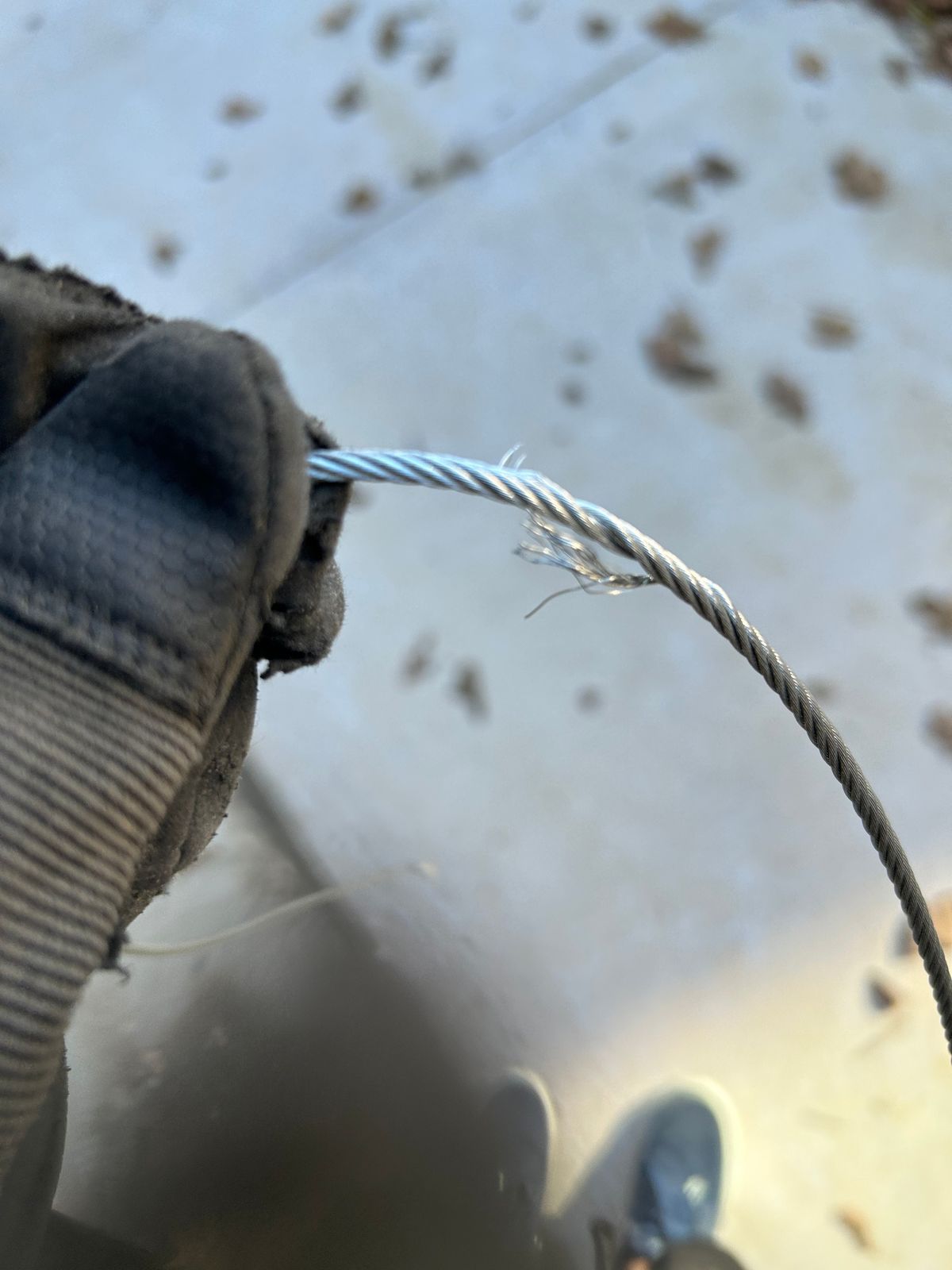
Signs a Garage Door Cable Is Due for Replacement
Cable replacement timing often becomes clear when door performance repeatedly changes, and visible wear appears around key lift points.
Replacement timing signs to watch include:
- Increasing door heaviness as the door’s weight stops balancing evenly
- One side lifts faster, creating uneven movement during travel
- Repeat jerky movement at the same point in the open or closed cycle
- Rust buildup along garage door cables, especially near drums and brackets
- Drum wrapping that looks uneven, loose, or different from prior cycles
- New scraping, ticking, or grinding sounds during normal travel
- Visible wear near the bottom bracket, where the cable anchors
- Long gaps between regular inspections and garage door maintenance
Catching these patterns early helps reduce safety risks and costly repairs by scheduling professional garage door maintenance service to confirm cable condition and reduce the chance of costly repairs.
Problems Often Mistaken for Opener or Track Issues
Cable issues can imitate opener or track trouble because shifting tension and uneven lift force can interrupt smooth operation without an obvious break.
Common misdiagnoses to watch for include:
- Slower lifting that feels like a garage door opener weakness
- Uneven movement that looks like a track alignment problem
- Repeat jerky movement during the first part of travel
- Mid-cycle stopping that seems like a motor or limit issue
- Reversing on close that looks like sensor trouble
- Scraping noise near the top corners where the cable wraps
- A bottom gap that appears on one side of the door
- Drum winding that looks loose, uneven, or messy
Repeated symptoms like these can lead to further damage, so professional service and garage door repair help confirm the real cause before the entire system takes on more strain.
What Can Happen If You Delay Replacement After Cable Damage
Delaying replacement after cable damage can turn a manageable issue into a serious safety hazard, as the door’s weight can shift suddenly, increasing the risk of property damage and serious injury.
|
What can happen |
Why it happens |
What can it lead to |
|
A sudden door drop or a door stuck crooked |
A weakened cable loses proper tension under high tension |
Serious injury risk, vehicle impact, and blocked access |
|
Cable snaps during a normal cycle |
Strand breaks progress until the weakest point fails |
Broken cable events, potential accidents, and emergency service needs |
|
Drums wind unevenly, or the cable jumps grooves |
Uneven lift force creates messy wrapping and slipping |
Track stress, uneven movement, and premature wear on garage door parts |
|
Extra strain on the garage door opener |
The opener compensates for imbalance and resistance |
Costly damage to the opener, slower operation, and costly repairs |
|
Damage spreads into springs and lift hardware |
Improper tension changes the load across the torsion spring system |
Greater safety risks, higher repair scope, and future issues |
|
Closing becomes unpredictable |
Resistance spikes, and the system reacts to abnormal force |
Safety reversal behavior, unsafe closing, and repeat service calls |
Uneven movement, sudden drops, and other serious risks tied to delayed service are explained in our blog on Is a Frayed Garage Door Cable Dangerous?, which explains why damaged lift cables can become a safety hazard fast.
When Garage Door Cable Repair Is Not the Right Solution
Garage door cable repair is not the right solution when damage affects load-bearing areas or tension stability, because high-tension lift parts can fail without warning, posing serious safety risks.
Repair is usually not appropriate in these situations:
- Fraying near the end loops or attachment points, where a secure hold is critical
- A kinked or flattened section that weakens the cable structure
- Rust and corrosion that reduce load capacity across the strands
- Stretching that causes uneven movement and changes the door balance
- Repeat slip-off events where the cable will not stay seated on the drum
- Visible wear near the bottom bracket where the cable anchors under load
- A previous broken cable event on the same side, showing repeat stress
- Ongoing cable issues combined with spring tension changes
To see why repeated slip-offs, corrosion, and tension shifts can turn repair into a short-term patch, read our blog on What Causes a Garage Door Cable to Snap?, as it breaks down the failure conditions technicians check before recommending replacement.
What a Professional Checks Before Recommending Replacement
Professional evaluation focuses on lift balance, cable tracking, and load-bearing hardware stability under spring tension.
Key inspection points often include:
- Strand condition along the full cable run, including frays and signs of wear
- Correct cable size and load rating for the door’s weight
- Drum grooves and wrapping pattern for overlap, drift, or slack
- Bottom bracket connection points for corrosion, looseness, or distortion
- Spring balance testing for proper tension and even lift on both sides
- Torsion spring system condition for uneven load transfer and high tension risk
- Hardware alignment across tracks, rollers, and related garage door parts
- Opener response when resistance increases during travel
Hardware changes and door upgrades can affect cable sizing and balance, so a professional evaluation before a garage door installation helps ensure the lift setup is configured for smooth operation after service.
Professional Garage Door Cable Replacement in Hilton Head, SC
Cable damage can create serious safety risks, uneven movement, and property damage when the door’s weight is no longer supported correctly. Fast action at the first signs of wear helps prevent costly damage and keeps your garage door system operating smoothly.
Elite Overhead Garage Doors provides professional evaluations and garage door repair in Hilton Head, SC, to identify cable issues and replace cables when needed. Contact us or give us a call today to schedule a garage door cable inspection and a recommendation for replacement.